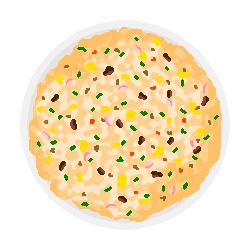
Wok Hei Wild
Hey, I’m Chris Burnell, and you’re reading Wok Hei Wild, a slightly-opinionated blog dedicated to reviewing fried rice!
Latest Reviews Permalink 
-
Por Kee Eating House 1996
Strong wok hei flavour, and many other excellent dishes to be had here!
-
Din Tai Fung
Very light and qingqing (青青), not especially oily, but has no wok hei flavour.
-
Sin Hoi Sai Eating House
Has just about everything you’d want in a good Yangzhou fried rice, with just the right amount of wok hei!
What is wok hei? Permalink 
Wok hei (鑊氣), a Cantonese term, means Breath of the Wok
, and refers to the smoky flavour achieved from cooking food in a wok. Typically, this flavour comes from the extremely high heat of the flame used when cooking with a wok, but can also come from cooking with coals.
Why fried rice? Permalink 
Fried rice is one of my favourite foods, and I could be completely happy to eat it every single day.
In particular, Yangzhou fried rice, or Yángzhōu chǎo fàn (扬州炒饭), is my favourite type of fried rice and also my #1 favourite thing to eat here in Singapore.
This isn’t just because of its abundance at Hawker centres and coffee shops (a general term used to describe casual dining eateries found throughout Singapore, usually comprised of a variety of food and beverage stalls), but also because it’s so damn good.
What are the scoring criteria? Permalink 
Every review will be scored on the same criteria: flavour, wok hei, quality of ingredients, variety of ingredients, texture, and portion size.
| Criteria | Score |
|---|---|
| Flavour | out of 10 |
| Wok Hei | out of 5 |
| Quality | out of 5 |
| Variety | out of 5 |
| Texture | out of 5 |
| Portion Size | out of 5 |
| Total | maximum 35 |
While these criteria may not be completely fair to every dish that I review, they represent the elements that make up my ideal fried rice. This means that dishes like fusion cuisine will probably score lower than a super-traditional Yangzhou fried rice, but that’s just, like, my opinion, man.